
Electric shuttles: how zero-emission transportation is shaping urban mobility
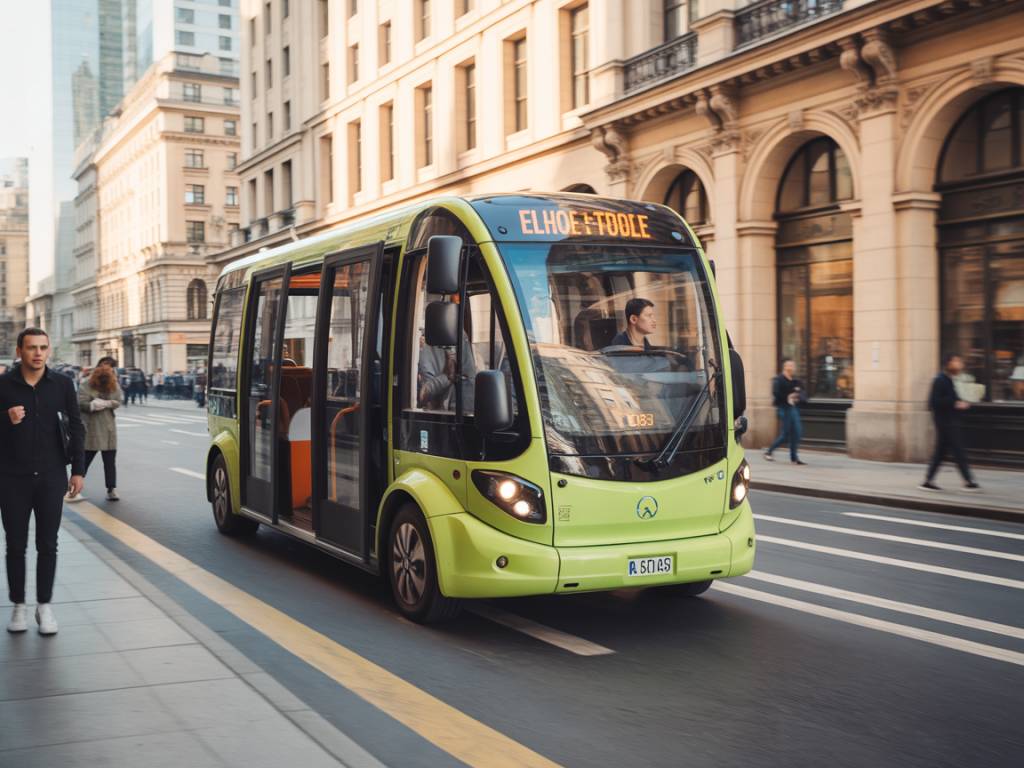
Walk through any major European city centre today and you will likely spot them: compact, near-silent vehicles gliding through traffic with no exhaust fume, no engine roar, barely a whisper. Electric shuttles are no longer a pilot project or a futuristic promise. They are already on the streets of London, Lyon, Helsinki, and Singapore — and they are quietly rewriting the rules of urban transportation. Understanding how zero-emission transportation is shaping urban mobility means looking beyond the clean exterior and examining the engineering, the economics, and the infrastructure shift happening right now.
Electric shuttles: how zero-emission transportation is shaping urban mobility
Electric shuttles sit at the crossroads of two major trends: the global push to decarbonise transport and the growing demand for smarter, more flexible urban mobility. Unlike full-size electric buses, they are compact enough to navigate dense city grids, yet large enough to carry 8 to 22 passengers depending on the model. That makes them uniquely suited to fill the gaps that traditional mass transit cannot reach efficiently.
Deployments are accelerating across the board. According to BloombergNEF, the global electric bus and shuttle market is projected to exceed $130 billion by 2030, with urban shuttle fleets accounting for a growing share of that figure. Cities are not just trialling these vehicles — they are committing to full fleet transitions as part of broader net-zero strategies.
What sets electric shuttles apart from conventional minibuses
The differences go far deeper than the absence of a combustion engine. Electric shuttles are purpose-built for urban duty cycles, with design choices that reflect exactly how and where they operate.
- Skateboard platform architecture: Most models use a flat-floor battery chassis, lowering the centre of gravity, improving stability, and creating a fully accessible interior — no steps, no ramps required.
- Single-speed direct drive: Operating at speeds typically between 20 and 50 km/h, there is no need for a multi-ratio gearbox. This dramatically reduces drivetrain complexity and long-term maintenance costs.
- LFP battery chemistry: Lithium Iron Phosphate cells are increasingly preferred over NMC for their thermal stability, longer cycle life (often exceeding 3,000 full cycles), and reduced fire risk — critical factors for vehicles operating continuously in public spaces.
- Regenerative braking: Stop-and-go urban driving patterns are actually an advantage for EVs. Regen systems recover kinetic energy on every deceleration, extending operational range by up to 15–20% compared to constant-speed routes.
Typical range sits between 100 and 180 km per charge depending on load, climate, and terrain. Most depot-based fleets use 22 kW AC overnight charging, while high-turnover operations increasingly rely on 50–150 kW DC fast charging to keep vehicles on the road during peak hours.
Key players and real-world deployments
Several manufacturers have moved well beyond the concept stage and are operating commercial fleets globally.
- Navya Arma: One of the earliest autonomous electric shuttles, deployed in over 25 countries including France, Switzerland, and Australia. It carries up to 15 passengers at Level 4 autonomy, with no steering wheel or pedals.
- EasyMile EZ10: Used extensively across European university campuses, airports, and hospital sites. A fleet in Lyon demonstrated a 10–15% reduction in tram overcrowding during peak hours by absorbing last-mile overflow.
- Volkswagen ID. Buzz AD: VW’s push into the autonomous shuttle segment, building on the iconic Microbus silhouette with a modern electric platform and Level 4 capability targeted for commercial launch by 2025.
- Yutong and BYD: Chinese manufacturers dominating Asian and emerging markets with high-volume, cost-competitive electric shuttle and minibus solutions already numbering in the tens of thousands of units deployed.
Beyond public transit, electric shuttles are being adopted by theme parks, corporate campuses, logistics hubs, and airports — any environment where short, repeated, predictable routes make the economics particularly compelling.
Why zero-emission transportation is now a strategic priority for cities
Urban air quality is a public health crisis. The World Health Organization estimates that 99% of the global urban population breathes air that exceeds safe pollution limits. Particulate matter (PM2.5) and nitrogen oxides (NOx) — both heavily produced by diesel engines — are directly linked to cardiovascular and respiratory disease. Electric shuttles eliminate tailpipe emissions entirely, making them a powerful lever in urban clean air strategies.
But emissions are only part of the equation. Cities are also grappling with:
- Congestion: Shared shuttle routes remove multiple private vehicles from circulation, reducing traffic density without requiring new road infrastructure.
- Noise pollution: Electric drivetrains operate at a fraction of the decibel level of diesel engines, improving quality of life in dense residential and commercial areas.
- Accessibility: Low-floor, step-free designs make electric shuttles far more inclusive for elderly passengers and people with reduced mobility.
- Last-mile connectivity: The critical 1–3 km gap between a metro or rail station and a final destination is where most urban journeys break down. Electric shuttles bridge that gap cost-effectively.
The financial case: total cost of ownership over sticker price
The upfront cost of an electric shuttle is undeniably higher than a comparable diesel minibus. Depending on autonomy level and specification, prices range from £80,000 for a basic EV shuttle to over £250,000 for a fully autonomous model. That figure gives many fleet managers pause.
However, total cost of ownership (TCO) over a 10-year operational lifespan tells a very different story:
- Fuel savings: Electricity costs per kilometre are typically 60–75% lower than diesel, depending on tariff and charging strategy.
- Maintenance reduction: Fewer moving parts, no oil changes, no exhaust system, no complex transmission — maintenance costs drop by an estimated 30–40% compared to diesel equivalents.
- Government incentives: In the UK, the Zero Emission Bus Regional Areas (ZEBRA) scheme provides substantial capital co-funding. EU Green Mobility grants and similar programmes across Europe further reduce the net investment required.
Case studies across high-frequency urban routes consistently show ROI achieved within 4 to 6 years — a figure diesel fleets rarely match even under optimised fuel and maintenance conditions.
Challenges still to overcome in electric shuttle adoption
Progress is real, but so are the obstacles. Fleet operators and city planners need to account for several practical challenges:
- Charging infrastructure: Depots require significant electrical upgrades to support simultaneous charging of multiple vehicles. Grid capacity and smart charging management are non-trivial investments.
- Sensor performance in adverse conditions: For autonomous variants, rain, fog, and low-light environments continue to challenge LiDAR and camera systems, requiring ongoing software refinement and safety redundancies.
- Cold weather battery performance: LFP chemistry helps, but pre-conditioning systems are still essential in climates like the UK and Northern Europe to maintain range and charging efficiency through winter months.
- Regulatory frameworks: Level 4 autonomous shuttles operate within a patchwork of national regulations that vary considerably across European markets, slowing cross-border scaling.
What this shift means for the automotive and aftermarket industry
The rise of electric shuttles is not just a transport story — it is a signal to everyone working in vehicle technology. Mechanics, installers, fleet technicians, and aftermarket specialists face a skills transition that is already underway. High-voltage safety certification, battery diagnostic tools, E/E (electrical and electronic) architecture familiarity, and OTA software update protocols are becoming baseline requirements rather than specialist knowledge.
For forward-thinking operators and technicians, the opportunity is significant. Specialised EV fleet maintenance, battery health monitoring services, and autonomous system calibration are growth areas with limited competition and strong demand. The transition from combustion to electric is not a threat to automotive expertise — it is a redirection of it.
Electric shuttles represent something larger than a quieter minibus. They are proof that zero-emission transportation can be practical, profitable, and scalable — and that urban mobility is entering a genuinely new chapter.