


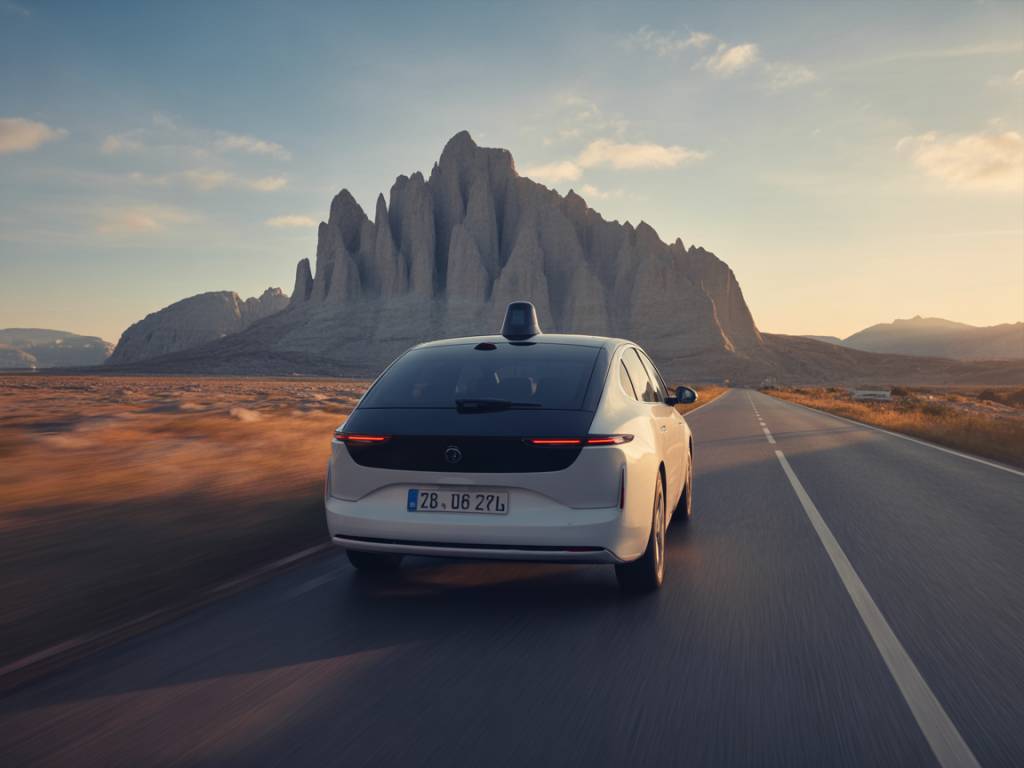
The Self-Driving Revolution: Why It’s Not Just About the Car
Autonomous vehicles are no longer science fiction — they’re engineering reality. We’re seeing LiDAR-topped test cars punch cruise control into a whole new realm. But while the technology steals headlines, it’s easy to forget something crucial: behind every self-driving car is a team of highly skilled professionals making it all possible. And for anyone passionate about vehicles, performance, and electronics, that means new career lanes are opening fast.
I’m not just talking about coding in a cubicle either. From systems engineers to calibration technicians, this industry blends hardcore tech with hands-on know-how — a lot like tuning, really, just with more sensors and decision-making algorithms. So if you’re wondering where your passion for performance parts or vehicle systems might fit into tomorrow’s automotive world, here’s a breakdown of key roles in the autonomous vehicle ecosystem right now.
Autonomous Vehicle Careers: Not Just for Silicon Valley Coders
A lot of folks hear « self-driving car » and immediately think “AI software engineers in hoodies.” Sure, machine learning is the engine of perception — but no AV rolls off the line without mechanical integration, real-time systems, diagnostics, and functional safety. If you’ve ever optimized a turbo map or integrated a CAN bus module, you’re dabbling in the same discipline—just applied differently.
Below are some of the top career paths that are actively hiring and what each role entails.
Systems Engineer (Autonomous Architecture)
A systems engineer is the glue between software, hardware, and vehicle integration. They look at the end-to-end functionality of the vehicle: how LiDAR sensors feed object detection, how the ECU interacts with the drive-by-wire steering system, and how every subsystem talks to each other.
If you’ve ever struggled to fit an aftermarket ECU and had to map out sensor inputs and outputs yourself, you already get 70% of the mindset here.
- Required skills: Knowledge of embedded systems, hardware-software integration, CAN protocols, systems modeling (MATLAB/Simulink).
- Who’s hiring: Companies like Waymo, Cruise, Tesla, and Tier 1 suppliers like Bosch or Continental.
- Salary range: £55,000 to £80,000/year, depending on seniority and region.
Sensor Fusion Specialist
This one’s all about making sense of overwhelming data. Cars see through radar, LiDAR, ultrasonic, and cameras. A sensor fusion engineer ensures this data is reconciled in real time to create a coherent picture of the environment.
Why does this matter to you? Because precision, latency, and accuracy are cornerstone metrics — just like when you install a wideband O2 sensor and tune fueling tables based on live readings.
- Required skills: Signal processing, Python/C++, experience with ROS, real-time systems.
- Who’s hiring: Nuro, Mobileye, Aptiv, and several robotics startups.
- Salary: Typically between £60,000 to £90,000/year.
Calibration & Validation Technician
This is where things get tactile. These professionals handle test vehicles, road trials, hardware prototyping, and data logging. Think of it as dyno tuning but for automated systems. They validate that a decision-making algorithm actually performs safely at a roundabout in Manchester — not just in simulation.
It’s one of the few AV jobs where your wear-and-tear boots matter more than your Github profile.
- Required skills: Data acquisition, CANalyzer/CANoe tools, mechanical aptitude, strong understanding of vehicle dynamics.
- Who’s hiring: R&D departments within Ford, Jaguar Land Rover, and third-party engineering firms.
- Salary range: £35,000 to £60,000/year.
Functional Safety Engineer (ISO 26262)
If the brake-by-wire fails on an AV, people could die. That’s where functional safety engineers come in. They don’t just test the product — they build failure tolerance into the system from day one.
It’s like building redundancy functions into a dual-fuel map setup to compensate for a sensor dropout — except with failover paths that can control a 2-ton electric SUV hurtling down the M40.
- Required skills: Familiarity with ISO 26262, fault tree analysis, safety lifecycle management.
- Who’s hiring: Every serious AV player — from OEMs to embedded systems consultancies.
- Salary: £70,000 to £100,000+ (particularly in safety-critical systems sectors).
Autonomous Vehicle Software Developer
This is the role everyone talks about. Writing perception, localization, and planning code for AVs. If you’re from a traditional tuning background, this might feel a bit removed — until you realise they’re writing logic that acts like a digital driver. Predictive path planning? It’s a form of AI-based torque vectoring with real-world stakes.
- Required skills: Python, C++, SLAM algorithms, neural networks, ROS/Autoware.
- Who’s hiring: Apple (yes, seriously), Oxbotica, Tesla, and startup incubators.
- Salary range: £65,000 to £110,000/year.
Applied AI & Deep Learning Researcher
These are the folks training neural nets to distinguish a fallen branch from a plastic bag. Or teaching the car how to handle rare edge-case behaviours — like a cyclist waving you on in a shared lane.
This job is more research-heavy, and typically more academic. But breakthroughs here eventually trickle down into software updates or control-system improvements — like over-the-air power band tweaks in EVs.
- Required skills: TensorFlow, PyTorch, statistical modeling, a PhD helps but isn’t mandatory.
- Who’s hiring: Universities, big tech AV labs, and increasingly OEM innovation hubs.
- Salary: £75,000 to £120,000 in high-demand projects.
Testing Engineer (AV Real-World Trials)
If you prefer the smell of petrol (or battery coolant) over keyboard clickety-clacks, this one’s for you. Testing engineers coordinate and run test drives for self-driving platforms — validating how software, sensors, and control logic interact in complex environments.
Don’t be surprised to find one of these engineers cruising through tight backroads with a test rack in the boot and a laptop on standby. Yes, you still need nerves of steel and an eye for anomalies. Basically, the dyno tuner of autonomy.
- Required skills: Field data collection, drive planning, vehicle controls understanding, real-world problem solving.
- Who’s hiring: Startups, manufacturers, and even insurance firms evaluating AV incident risk.
- Salary: £40,000 to £70,000/year.
How to Break Into the AV Industry
Whether you’re a tuner, an electronics installer, or just curious about what’s under the hood of a Level 5 robotaxi, your experience matters. Here’s how you pivot into this high-tech field without starting from zero:
- Level Up with Targeted Courses: Many universities now offer short courses in AV systems, AI for mobility, or automotive cybersecurity. Look into institutions like Cranfield, or even online providers like Coursera (check the offerings from University of Toronto and MIT).
- Get Hands-On with Projects: Arduino-based autonomous kits or Raspberry Pi + camera car builds teach the same principles pros use. Not glamorous, but effective for demo portfolios.
- Leverage Your Mechanical Experience: Show employers how your tuning or diagnostic background gives you insight into real vehicle behaviour — something AI devs often lack.
- Join Automotive Meetups or Hackathons: In London or Birmingham, these are hotspots for AV talent and networking. Many job interviews start here informally.
One of our readers — Sam from Leeds — went from installing aftermarket digital dashes into track cars to calibrating dash-integrated perception systems in Euro NCAP AV test beds. Same wiring harness fundamentals, completely new playground.
Final Thoughts: Why AV Jobs Matter to “Petrolheads” Too
It’s easy to think autonomous driving is for the tech crowd, but the truth is, these vehicles still move like cars, behave like cars, and fail like cars — just more systematically and with a lot more data. Whether you’re into brake bias tweaking or real-time ECU mapping, your skills translate more than you think.
And if you’re worried about the future of performance driving—don’t be. As long as vehicles exist, so will enthusiasts. In fact, hybrid setups with driver-assist and manual override might become an entire tuning subculture. You heard it here first.
Got any experience with sensor integration or AV test setups? Drop a comment or send me a message. I’d love to hear which direction you’re taking your automotive passion in this next-gen landscape.